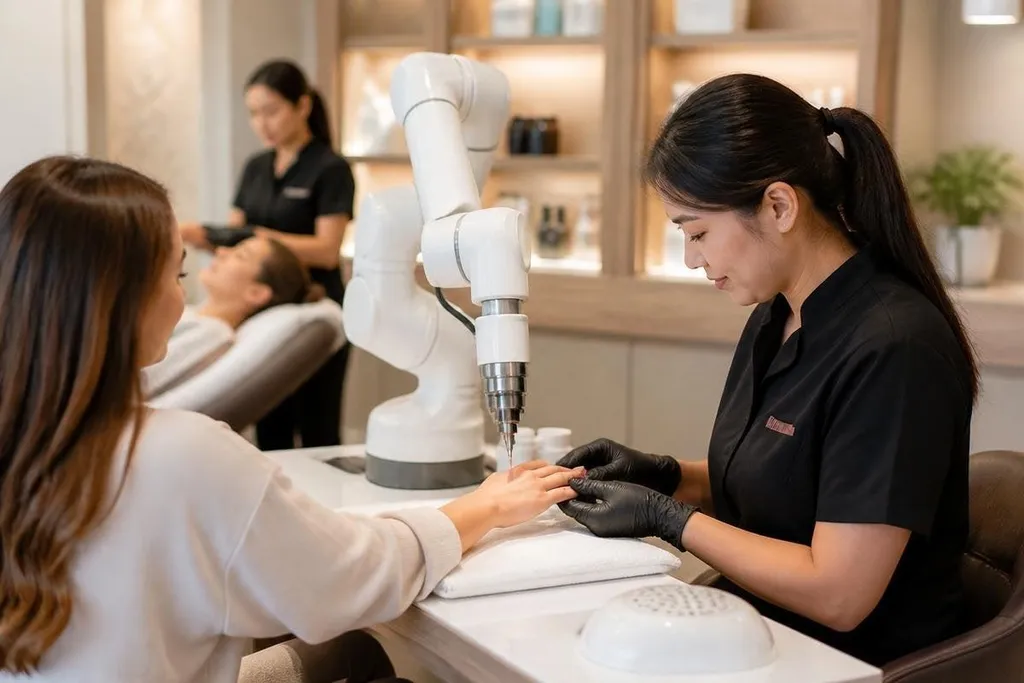
A beauty business gets paid for a narrow set of repeatable tasks: washing, drying, applying products, shaping nails, or preparing treatment rooms.
Robots could take on parts of that work, giving owners new ways to sell services, rent equipment, or support staff without turning the salon into a machine room.
The business case depends on the task. A robot that handles a repeatable step may earn its place; one that needs constant supervision may add cost without adding capacity.
Quick read
- Robot makers can sell equipment, service contracts, or use-based access.
- Salons may gain time for consultations and higher-value work.
- Safety, training, cleaning, and customer comfort will shape adoption.
Where buyers may see value
Beauty work contains many tasks with clear steps and repeated motions. Nail preparation, product dispensing, hair washing, towel handling, and stock checks each have a defined start and finish. That makes them easier to study than a full haircut or cosmetic consultation.
That system can also support staff without taking over the whole service. It might hold a tool, prepare a station, measure a product, or repeat a movement while a trained person checks the result. The owner then has a choice: serve more clients, shorten waiting time, or give staff more time with each client.
Customer trust matters just as much as speed. People may accept a robot for a wash or drying step sooner than for a treatment that touches the face, eyes, or skin. A visible stop button, clear cleaning process, and staff control would matter at every stage.
The first buyers are likely to care about repeatability and staff time. A system that prepares a workstation between clients could help a busy site keep appointments on schedule. A machine that checks product amounts could also reduce waste, provided the owner can verify its measurements.
The strongest sales case will come from one narrow task with a clear cost. Buyers need to compare the robot’s payment, service plan, cleaning time, staff training, and repair needs with the hours it frees. A broad promise about “automation” won't answer that question.
Beauty brands may find another route through branded treatments. A robot could deliver the same steps, product amounts, and timing across several locations. That could help a company keep a fixed service format, though customer response would still decide whether the format works.
Four ways companies could make money
The same robot can support different business models, depending on who owns it and who carries the service risk.
- Equipment sales: A salon buys the robot and pays for setup, training, replacement parts, and software updates.
- Monthly service: The maker keeps a service relationship with the salon and charges a regular fee for maintenance and support.
- Pay per treatment: A small salon pays for each completed task instead of buying equipment upfront.
- Robot-equipped locations: A company runs its own beauty sites, using machines as part of a fixed service format.
- Tools for professionals: A supplier sells robots to salons that need repeatable support for staff, hygiene, or stock work.
These models shift the financial risk. An equipment sale puts more risk on the salon. A service or use-based plan keeps more responsibility with the maker, which may help small operators test the idea without a large first payment.
A salon owner needs proof that a beauty robot can finish the service with staff nearby. Robot24.com's beauty robotics reporting can connect the task to the operator role, test setting, and price before the salon chooses a payment plan.
Limits that shape the market
Skin, hair, and nails vary from person to person. A robot that works well with one client may need a staff member to correct its position, pressure, or product choice for another. Hair can move, skin can react, and customers can change their minds during a service.
Cleaning will be part of the business model, not a side task. Any device that touches people needs a clear process for removing product residue, checking contact surfaces, and preparing the next appointment. The owner also needs a way to pause the robot when a client feels discomfort.
I’d start with back-of-house work and tightly bounded services, where staff can check each step before the client leaves.
A buyer’s checklist
Before paying for a beauty robot, ask:
- Which single task does it perform, and how often does that task occur each day?
- What does a staff member still need to do before, during, and after the task?
- How does the system stop when a client moves or reports discomfort?
- Who cleans the contact surfaces, and how long does that process take?
- What happens when the robot needs repair during a booked appointment?
- Can the owner see service records, error logs, and completed task data?
The next business opportunity will belong to the company that can answer those questions with a working service plan, clear costs, and a safe role for staff. In beauty care, the machine earns its place one client and one repeatable task at a time.